
Digital X-rays
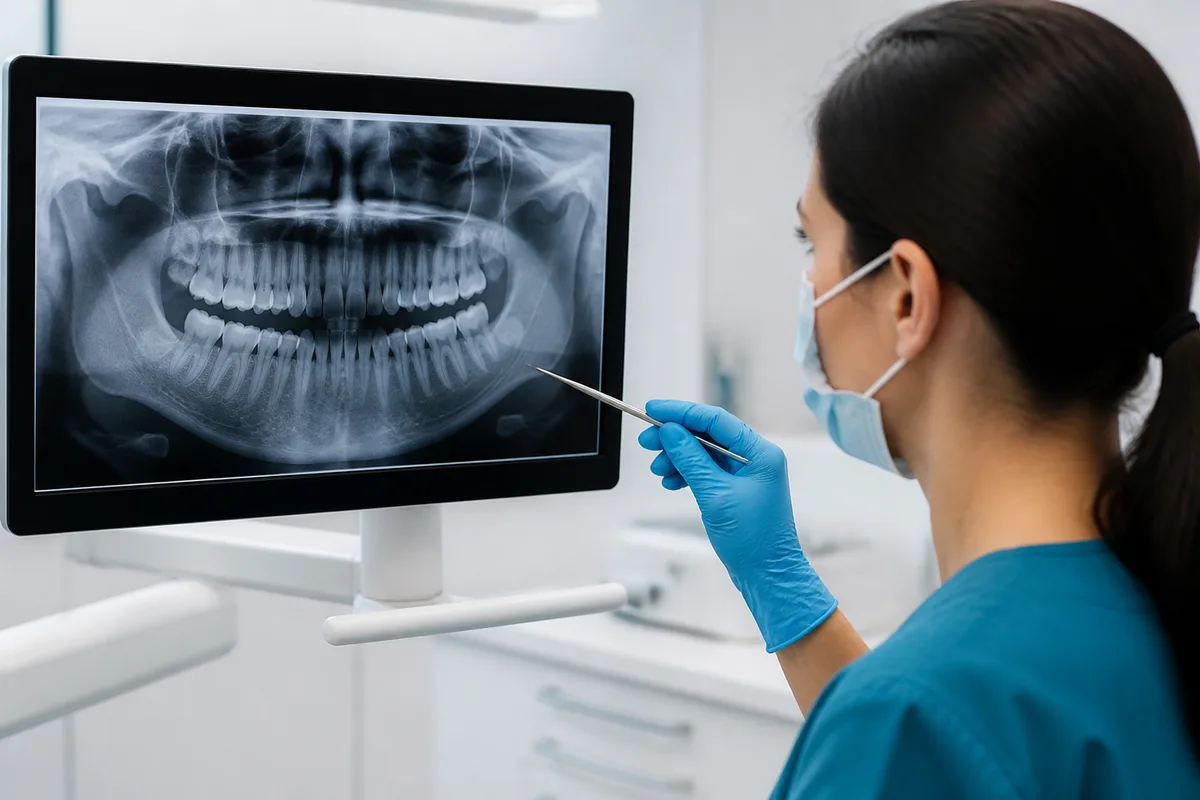
Digital X-rays
Digital X-rays are a routine part of diagnostic dental care, and at Synera Dental Wellness they form part of the broader imaging picture we use to understand not just your teeth, but the structures that support breathing, jaw function, and growth. This page explains what digital X-rays are, how they fit into care here, and what you can expect during a visit.
What digital X-rays is
Digital X-rays capture images of teeth, roots, and supporting bone using a small electronic sensor instead of traditional film. The sensor sends the image directly to a computer screen, where it can be viewed, enlarged, and adjusted for contrast within seconds. This replaces the older process of exposing and developing film, which required more time and generally more radiation to produce a usable image.
Because the sensor is more sensitive to X-ray exposure than film, digital X-rays require a smaller dose to capture the same level of diagnostic detail. The images can also be stored electronically, compared side by side over time, and shared easily between providers when coordinated care is needed.
How we use it at Synera Dental Wellness
At Synera Dental Wellness, digital X-rays are used to evaluate teeth, roots, and bone as part of routine diagnostic care. They work alongside our other imaging capability, CBCT (cone-beam CT) imaging, which is used when a more three-dimensional view of skeletal and airway structure is needed. Digital X-rays typically address the day-to-day questions — decay, bone level, tooth position — while CBCT is reserved for cases where a fuller picture of jaw and airway anatomy informs treatment planning.
This imaging supports the diagnostic evaluations offered here, including TMJ evaluation and treatment, airway-focused dentistry evaluation, and orthodontic assessment for children and adults. Dr. Jeremy Montrose reviews imaging findings as part of building a treatment plan, particularly where jaw structure, tooth position, or growth and development are relevant to the concern being addressed.
What it means for you
For patients, digital X-rays offer several practical advantages over older film-based methods:
- Lower radiation exposure — the sensor requires less exposure than traditional film to produce a clear image.
- Faster results — images appear on screen almost immediately, without waiting for film to develop.
- Clearer communication — because images can be enlarged and viewed together with you, it's easier to see and understand what's being discussed.
- Easier record-keeping — digital images can be stored and compared over time, which is useful for tracking changes in teeth, bone, or jaw position.
These are general benefits of digital X-ray technology and apply to the kind of diagnostic imaging used in routine dental evaluation.
What to expect during your visit
Before an X-ray is taken, you may be asked to remove any jewelry or metal near the head and neck, and a lead apron or thyroid collar may be used for added shielding. A small sensor is positioned in or near the mouth, depending on which teeth or area is being imaged, and you'll be asked to hold still for a moment while the image is captured.
The process itself typically takes only a few minutes for a full series, and each individual image is captured almost instantly. Afterward, the images appear on a monitor, where they can be reviewed with you as part of your exam or consultation. There is no recovery time needed, and you can resume normal activity immediately.
Frequently asked questions
Are digital X-rays safe?
Digital X-rays use a lower dose of radiation than traditional film X-rays while still producing detailed diagnostic images. Protective measures, such as a lead apron, are typically used during the process as an added precaution.
How long does the process take?
A single digital X-ray image is captured in moments, and a full set typically takes only a few minutes as part of a broader exam. Results appear on screen right away, so there's no waiting for film to develop.
How often are X-rays needed?
How frequently X-rays are recommended depends on your individual dental history, current concerns, and any treatment being planned or monitored. Your provider will discuss what's appropriate for your situation during your visit.
Who are digital X-rays suitable for?
Digital X-rays are a standard part of dental evaluation for patients of many ages, from children to adults, as part of routine checkups, orthodontic assessment, or evaluation of jaw and airway-related concerns.
If you have questions about digital X-rays or would like to schedule a visit, reach out to Synera Dental Wellness — we're happy to talk through what imaging might be part of your care.
This content is for general information only and isn't dental or medical advice. Talk with your dentist or orthodontist about your own situation. If you have a medical emergency, call 911.