Custom 3D-Printed Appliances
Custom 3D-Printed Appliances
Custom 3D-printed appliances are dental devices — braces, expanders, orthotics, and other orthodontic or functional appliances — that are designed and manufactured using digital scans of a patient's teeth rather than shaped by hand from generic molds. The result is an appliance built to the precise contours of an individual mouth, rather than one adapted from a standard size.
What custom 3D-Printed Appliances is
Traditionally, orthodontic and functional appliances were made from a limited set of pre-formed shapes and sizes, then adjusted by hand to approximate a patient's bite and tooth structure. This approach works, but it introduces gaps between what the appliance is designed to do and how it actually fits a particular mouth.
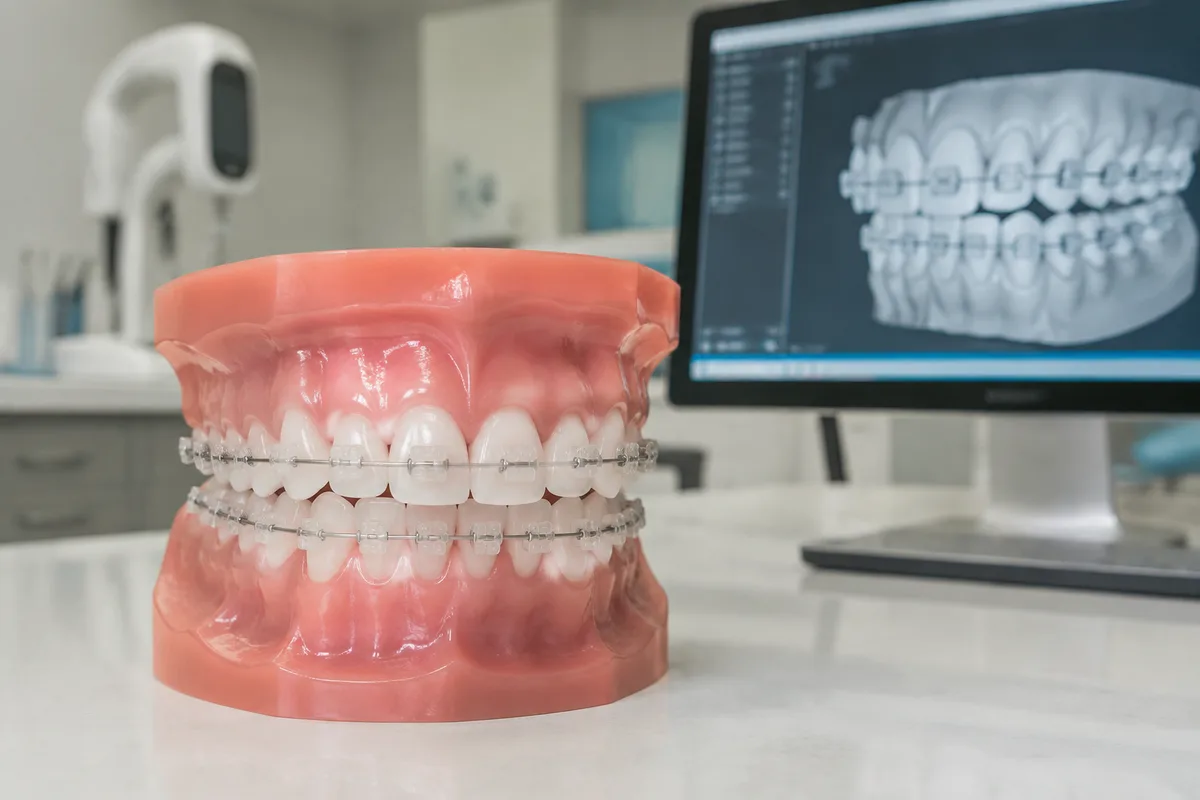
3D printing changes the starting point. A digital scan captures the exact shape of the teeth and bite, and that data is used to design an appliance that matches those structures directly. The appliance is then produced with a level of dimensional accuracy that off-the-shelf brackets and generic molds can't replicate, since it is built around actual measurements rather than an average approximation.
This technology is used across a range of appliance types — brackets for braces, expansion devices, functional and orthopedic growth appliances, and oral orthotics — anywhere a precise, individualized fit improves how the appliance performs.
How we use it at Synera Dental Wellness
At Synera Dental Wellness, custom 3D-printed appliances are designed from digital scans of your teeth, giving each appliance a more precise, personalized fit than standard, off-the-shelf brackets allow. This applies to several of the appliances used in our orthodontic and functional treatment, including custom 3D printed braces, expansion appliances, and functional and orthopedic growth and remodeling appliances.
For patients undergoing airway- and TMJ-focused orthodontics or skeletal expansion under Dr. Jeremy Montrose's care, a precise fit matters because these appliances are meant to guide jaw development and structure over time — small inaccuracies in fit can affect how consistently an appliance does its job. Digital scanning and 3D printing let the appliance design be built around each patient's actual anatomy rather than a close approximation.
In cases where a fuller picture of skeletal and airway structure is useful, CBCT imaging may also inform appliance planning, giving a three-dimensional view that complements the surface detail captured by the digital scan.
What it means for you
A digitally designed, custom-fit appliance generally means less need for manual adjustment after it's placed, since it was built to match your mouth from the start. For many patients, this can translate into a more comfortable initial fit and fewer follow-up visits dedicated purely to fit corrections.
- Precision — the appliance is shaped to your actual scanned anatomy, not an average size.
- Comfort — a closer starting fit typically means less irritation from an ill-fitting device.
- Clear communication — digital scans give you and your dentist a shared, visual reference for what's being designed and why.
- Fewer redo visits — accurate initial fabrication reduces the likelihood of needing a appliance remade from scratch.
What to expect during your visit
The process begins with a digital scan of your teeth, a quick and non-invasive step that replaces the traditional putty impression. The scan typically takes just a few minutes and produces a detailed digital model of your bite and tooth surfaces.
That digital model is then used to design your appliance, which is manufactured off-site or in-office depending on the device. Once ready, the appliance is fitted at a follow-up visit, where your dentist checks how it sits against your teeth and makes any small adjustments needed.
Because the appliance was designed from your specific scan, most patients find the initial fit noticeably closer than with a generic device, though some fine-tuning at the fitting appointment is still normal. The overall number of visits and timeline will depend on which appliance you're receiving and your individual treatment plan.
Frequently asked questions
Is the digital scanning process safe?
Yes. Digital scanning uses light-based imaging to capture the shape of your teeth and does not involve radiation, making it a safe step in designing a custom appliance.
Will a 3D-printed appliance feel different from a traditional one?
Because it's built from your own scanned measurements, a 3D-printed appliance is designed to match your mouth more closely from the outset, which many patients experience as a more comfortable initial fit compared to a standard, mass-produced appliance.
How long does it take to receive a custom appliance?
Timing varies depending on the specific appliance and your treatment plan. After your digital scan, the appliance is designed and manufactured before your fitting visit; your dentist can give you a more specific timeline based on your case.
Who is a candidate for custom 3D-printed appliances?
Custom 3D-printed appliances are used across a range of treatments, including orthodontics for children and adults, skeletal expansion, and functional or orthopedic growth appliances. Whether this approach fits your situation depends on your specific dental and developmental needs, which your dentist can assess during an evaluation.
If you'd like to learn more about how custom 3D-printed appliances might fit into your care, reach out to Synera Dental Wellness to schedule a visit and discuss your options.
This content is for general information only and isn't dental or medical advice. Talk with your dentist or orthodontist about your own situation. If you have a medical emergency, call 911.