
TMJ Evaluation and Treatment
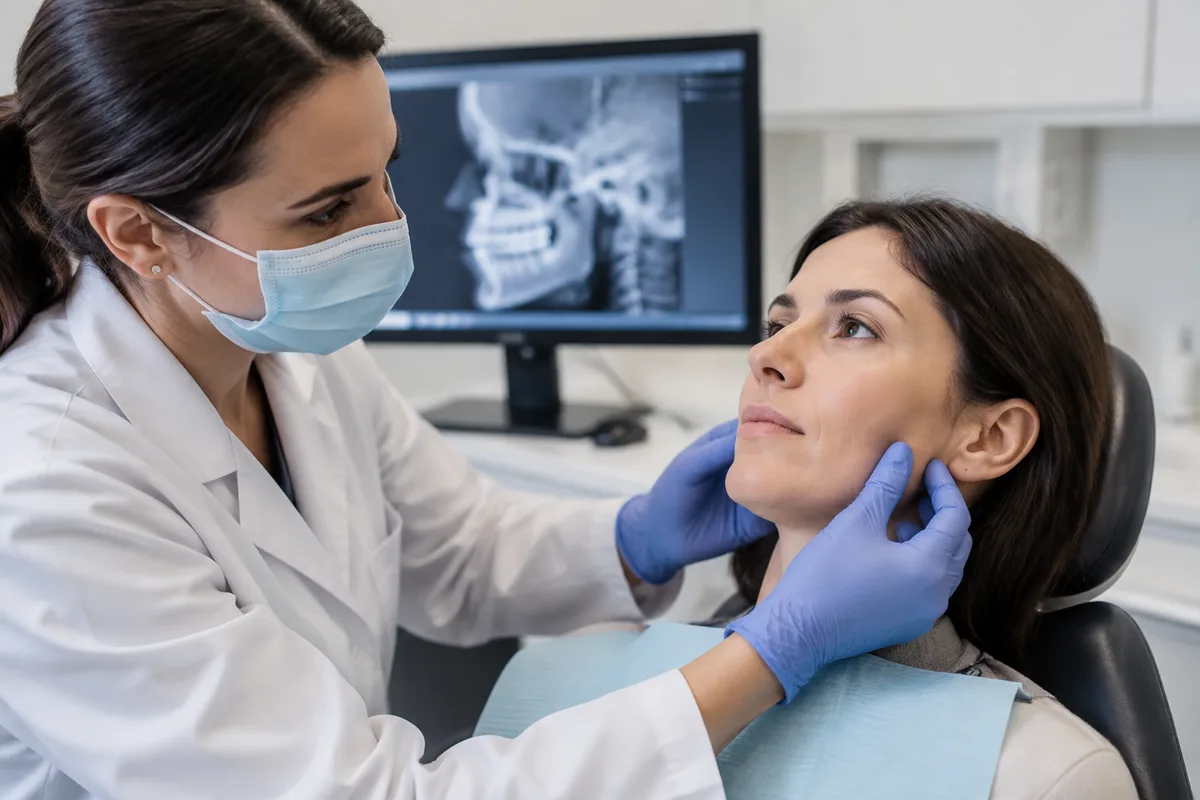
TMJ Evaluation and Treatment
The temporomandibular joints connect your jaw to your skull and allow it to open, close, and move side to side. When these joints or the surrounding muscles are strained or misaligned, the result can be pain, clicking, or limited movement. A TMJ evaluation looks closely at how your jaw functions and identifies factors contributing to discomfort.
What an Evaluation Involves
- Jaw Function Assessment — checking range of motion, joint sounds, and muscle tenderness.
- Bite and Alignment Review — examining how the upper and lower teeth meet and how this may relate to joint strain.
- CBCT Imaging — when needed, cone-beam CT evaluation helps assess skeletal and joint structure for a fuller picture.
Treatment Approaches
- TMJ Oral Orthotics — custom-designed appliances that help manage joint and muscle strain.
- Therapeutic Injections — used in some cases to address muscle-related discomfort.
- Airway-Focused Considerations — since jaw position and breathing can be interrelated, treatment may take airway function into account.
Who Provides Care
Dr. Jeremy Montrose, D.M.D., leads TMJ evaluation and treatment at Synera Dental Wellness. His training includes a comprehensive overview of TMD and orofacial pain disorders through UCLA School of Dentistry, along with continued study and lecturing on TMJ- and airway-focused approaches to care. He works to understand each patient's jaw function within the broader context of oral and airway health.
This content is for general information only and isn't dental or medical advice. Talk with your dentist or orthodontist about your own situation. If you have a medical emergency, call 911.