
Lip-Tie Release
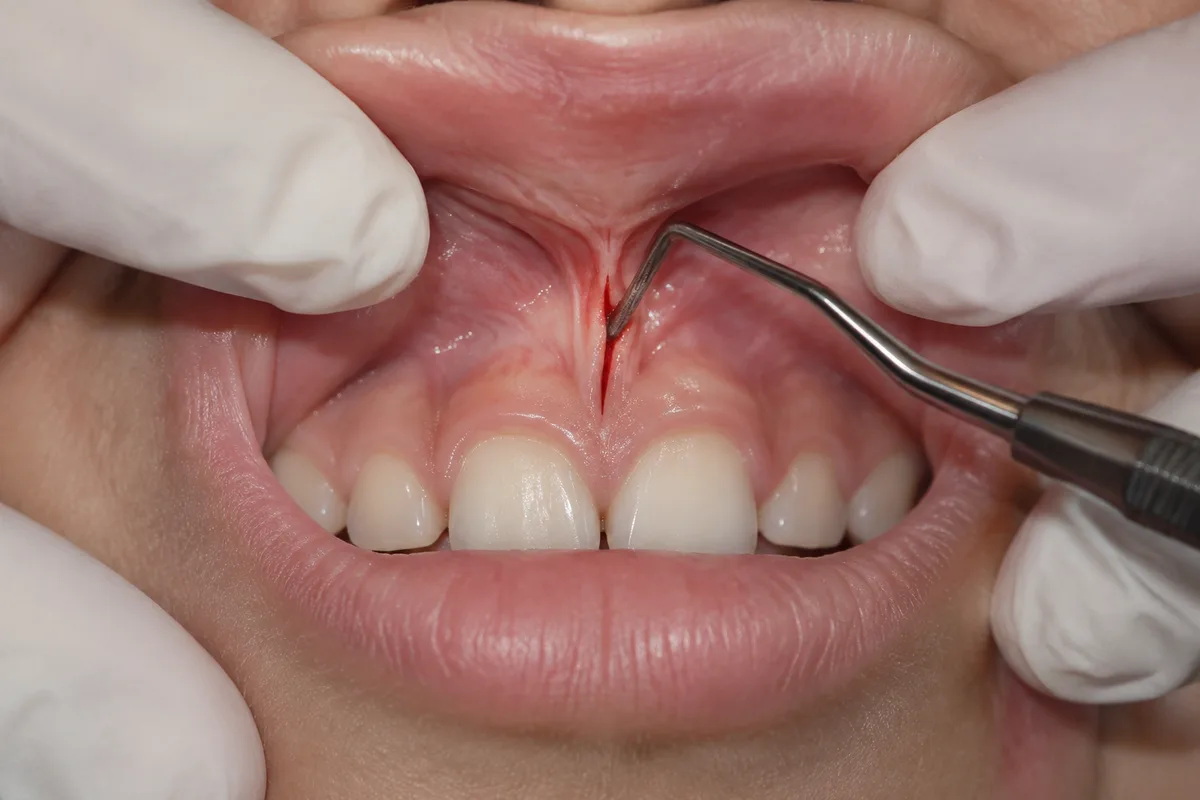
Lip-Tie Release
A lip-tie occurs when the strip of tissue connecting the upper lip to the gum, called the labial frenum, is thicker or tighter than usual, limiting how the lip can move. This can affect feeding in infants and, in some cases, contribute to spacing or hygiene concerns as children grow. Lip-tie release is a treatment aimed at restoring more typical lip mobility.
When It's Considered
- Infant Feeding Difficulty — A tight upper lip can affect the ability to form a proper seal during breastfeeding or bottle feeding.
- Restricted Lip Movement — Some children and adults have limited lip flexibility that may relate to speech, hygiene, or dental spacing.
- Gum and Tooth Spacing — A thick frenum extending between the front teeth can sometimes be associated with a visible gap.
Our Approach
Dr. Jeremy Montrose evaluates lip-tie alongside overall oral function, drawing on his training in functional frenuloplasty for patients of all ages. This assessment considers how the lip interacts with feeding, speech, and oral habits, rather than looking at the tissue in isolation.
- Functional Frenuloplasty — A precise release of the lip-tie tissue, performed with attention to the surrounding function.
- Coordinated Care — Lip-tie evaluation is often considered together with tongue-tie assessment, since the two can influence each other.
- Follow-Up Guidance — Recommendations for aftercare and, when appropriate, myofunctional therapy to support healthy movement patterns.
This content is for general information only and isn't dental or medical advice. Talk with your dentist or orthodontist about your own situation. If you have a medical emergency, call 911.